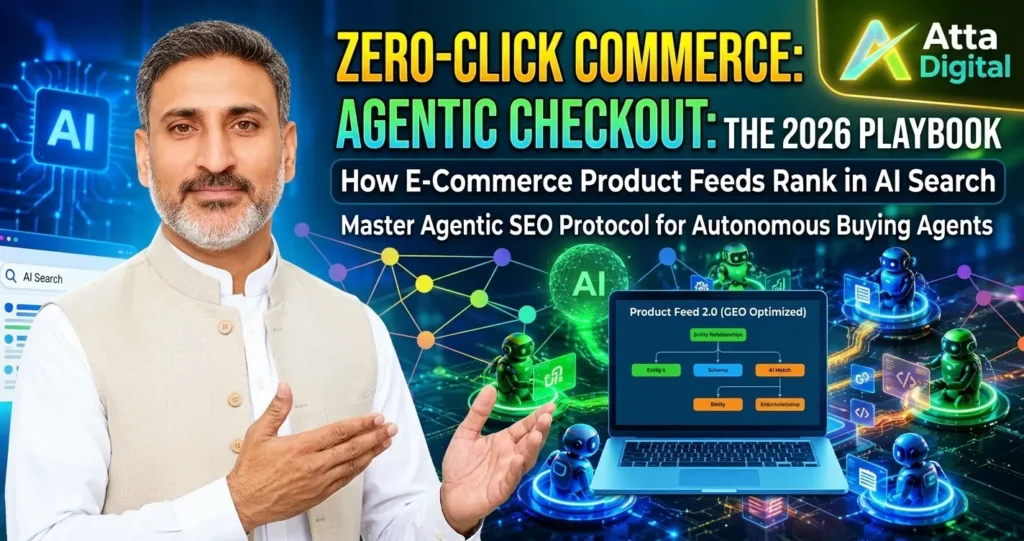
Welcome to the frontline of digital evolution in 2026. As the Founder and CEO of Atta Digital, I have spent countless hours researching how search engines and artificial intelligence are rewriting the rules of online retail. Today, businesses are moving past traditional blue links and stepping directly into the era of Zero-Click Commerce.
عطا ڈیجیٹل کی خصوصی تحقیق: زیرو کلک کامرس اور اے آئی ایجنٹس کا نیا دور
آج کے جدید دور میں جب صارفین کسی مصنوعات یا سروس کی تلاش کرتے ہیں، تو وہ ویب سائٹس پر روایتی کلکس کرنے کے بجائے براہِ راست اے آئی اسسٹنٹس سے فیصلہ کن مشورہ لیتے ہیں۔ یہی وجہ ہے کہ عطا ڈیجیٹل نے اپنی حکمت عملی کو اپ ڈیٹ کرتے ہوئے جنریٹو انجن آپٹیمائزیشن اور پروڈکٹ فیڈ کی درستگی پر کام شروع کر دیا ہے تاکہ آپ کے برانڈز کو مصنوعی ذہانت کے سسٹمز فوری طور پر پہچان سکیں اور صارفین کو تجویز کریں۔
What is Zero-Click Commerce and Why Does It Dominate 2026?
For more than twenty years, traditional e-commerce followed a predictable funnel. A potential customer typed a query into a search bar, clicked through several blue links, compared tabs manually, read reviews on third-party blogs, and finally entered payment details on a merchant checkout page. That linear journey is rapidly disappearing. Autonomous AI shopping agents now evaluate specifications, compare real-time pricing, verify shipping warranties, and complete purchases on behalf of the buyer within a single conversational interface.
In this modern ecosystem, Zero-Click Commerce occurs when the entire discovery, evaluation, and purchasing cycle concludes without the customer ever visiting your traditional storefront. If your product catalog and structured feeds are not engineered for instant machine retrieval, your brand remains invisible to the fastest-growing segment of online buyers. You can explore our foundational research on our 2026 GEO strategy guide to understand how conversational search engines prioritize authoritative brands.
Unlike standard search engine optimization, where ranking on the first page guaranteed a steady flow of organic clicks, Zero-Click Commerce operates on a winner-takes-all synthesis model. When an AI assistant answers a buyer’s request, it does not present ten links; it recommends one or two verified options backed by structured data confidence.
How AI Shopping Agents Evaluate and Select Products
Many store owners mistakenly assume that AI agents browse websites visually like human shoppers. In reality, large language models and autonomous shopping assistants bypass decorative web design, banner sliders, and persuasive sales copy. Instead, they ingest raw structured data, API endpoints, and verified merchant feeds.
According to official documentation from Google Search Central on Product Structured Data, search engines and AI systems rely heavily on explicit schema attributes to verify price accuracy, stock availability, and merchant trustworthiness. Without this machine-readable layer, an AI agent cannot confirm whether your product is in stock or eligible for fast delivery, forcing it to recommend a competitor whose data is transparent.
عطا حسین لاکھو کا تجارتی اور تکنیکی نقطہ نظر
آکسفورڈ یونیورسٹی اور گوگل کی پیشہ ورانہ تربیت سے حاصل کردہ تجربے کی روشنی میں، میرا ہمیشہ سے یہ ماننا رہا ہے کہ جدید ٹیکنالوجی کے ساتھ شفافیت اور انسانی بھروسا سب سے بڑی طاقت ہے۔ جب ہم عطا ڈیجیٹل کے پلیٹ فارم پر کسی کاروبار کے لیے کام کرتے ہیں، تو ہم صرف سطحی الفاظ پر انحصار نہیں کرتے بلکہ برانڈ کی تکنیکی بنیادوں اور ڈیٹا اسٹرکچر کو اتنا مضبوط بناتے ہیں کہ سرچ انجن اور اے آئی سسٹمز خود بخود اس پر اعتماد کریں۔
Five Pillars of Product Feed Optimization for Zero-Click Commerce
To position your business at the forefront of Zero-Click Commerce, you must treat your product feed as your primary storefront. Below are the five core technical pillars required to win AI agent recommendations:
1. Granular Semantic Attributes Over Marketing Fluff
Traditional product descriptions often rely on vague adjectives such as “premium quality,” “ultra-fast,” or “best-in-class.” AI agents discard subjective claims during evaluation. Instead, your feed must provide concrete, verifiable attributes: exact dimensions, material composition, compatibility standards, battery capacity, warranty duration, and specific use-case scenarios. When a user asks an assistant for a laptop bag that fits a 16-inch workstation and resists heavy rain, the agent filters strictly by technical attributes.
2. Real-Time Inventory and Pricing Synchronization
Nothing destroys algorithmic trust faster than stale data. If an AI agent recommends your product based on a cached feed, only for the transaction API to fail due to an out-of-stock status or a sudden price mismatch, your domain receives a severe reliability penalty. Implementing real-time webhook updates or automated hourly feed refreshes ensures your pricing, tax rules, and stock levels remain synchronized across every discovery channel.
3. Deep JSON-LD Schema and Entity Linking
Every product page and merchant profile must implement clean, nested JSON-LD markup following the standards maintained by Schema.org Product Specifications. Beyond basic price and SKU fields, advanced Zero-Click Commerce architecture connects the product entity directly to the parent organization, verified customer review aggregates, return policy schemas, and shipping details. You can learn more about how we structure corporate entities on our digital marketing agency overview.
4. Structured Return, Refund, and Fulfillment Policies
Modern AI assistants act as risk-averse personal shoppers. Before executing a zero-click checkout, the agent checks post-purchase protections. Explicitly defining your return window, restocking fees, warranty coverage, and estimated delivery timelines within your merchant center feed significantly increases conversion rates inside conversational interfaces.
5. Verified Sentiment and Authentic Review Signals
AI models synthesize thousands of customer reviews to generate concise pros-and-cons summaries. Encouraging verified buyers to leave detailed, specific feedback—and marking up those reviews with valid structured data—gives AI agents the social proof required to recommend your brand with confidence.
Traditional SEO vs. Zero-Click Commerce: Strategic Comparison
Understanding the operational shift from legacy search optimization to Zero-Click Commerce helps leadership teams allocate budgets effectively. The table below outlines the core differences across key performance areas:
| Strategic Dimension | Traditional E-Commerce SEO | Zero-Click Commerce (2026) |
|---|---|---|
| Primary Objective | Maximize organic clicks to product landing pages | Win direct AI agent citations and autonomous checkouts |
| Core Asset | Keyword-optimized category and blog pages | Real-time JSON-LD product feeds and entity graphs |
| Buyer Journey | Multi-tab comparison, cart addition, manual form fill | Single conversational prompt with instant API fulfillment |
| Ranking Signals | Backlink volume, anchor text, and meta titles | Data accuracy, stock latency, schema validity, and trust |
| Technical Speed | Human page load speed (Core Web Vitals) | Sub-second API response times and AMP readiness |
Common Mistakes That Block Brands from AI Discovery
During technical audits conducted at Atta Digital, we frequently uncover hidden bottlenecks that prevent otherwise reputable businesses from appearing in AI-generated shopping recommendations. Avoiding these pitfalls is essential for mastering Zero-Click Commerce:
- Duplicate or Fragmented Categories: Maintaining multiple overlapping categories with identical slugs confuses crawlers and dilutes topical authority. Clean taxonomy is non-negotiable.
- Missing Global Identifiers (GTIN, MPN, Brand): AI models cross-reference products across global databases using standardized identifiers. Leaving GTIN or MPN fields blank isolates your catalog from comparison engines.
- Blocking AI Crawlers in Robots.txt: Overly restrictive firewall or robots.txt rules can inadvertently block legitimate AI search agents from indexing your structured product feeds.
- Inconsistent Pricing Between Feed and Checkout: Even minor discrepancies between advertised feed prices and final checkout totals trigger automated trust suspensions.
مستقبل کی تیاری: کاروبار اور برانڈز کے لیے عملی لائحہ عمل
اگر آپ چاہتے ہیں کہ آپ کا کاروبار آنے والے سالوں میں ڈیجیٹل مارکیٹ میں سرفہرست رہے، تو آپ کو روایتی طریقوں سے نکل کر اے آئی اور پروڈکٹ فیڈ کی اصلاح کو فوری طور پر اپنانا ہوگا۔ اپنی ویب سائٹ کی رفتار، صاف ستھری کیٹیگریز، اور مستند معلومات کے ذریعے آپ نہ صرف گوگل سرچ بلکہ جدید اے آئی پلیٹ فارمز پر بھی اپنی برتری ثابت کر سکتے ہیں۔ عطا ڈیجیٹل کی ٹیم اس پورے سفر میں آپ کی رہنمائی کے لیے ہمہ وقت تیار ہے۔
Step-by-Step Implementation Checklist for Store Owners
Transitioning toward Zero-Click Commerce does not require rebuilding your entire website from scratch. By following a disciplined, step-by-step roadmap, you can upgrade your existing infrastructure within weeks:
- Audit Your Site Architecture: Consolidate thin or duplicate categories, implement clean 301 redirects for legacy URLs, and ensure mobile AMP compatibility across all informational and commercial pages.
- Upgrade Your Schema Markup: Deploy comprehensive JSON-LD scripts covering Organization, WebSite, BreadcrumbList, and detailed Product entities.
- Enrich Product Titles and Attributes: Rewrite product titles to follow a clear, logical structure (Brand + Model + Key Specification + Variant) rather than keyword-stuffed phrases.
- Test Speed and Server Response: Utilize caching and edge delivery networks so both human visitors and automated APIs experience sub-second response times. Explore our digital performance tools to benchmark your site’s readiness.
- Monitor AI Citations and Search Console: Track brand impressions, entity queries, and structured data health inside Google Search Console every week.
Conclusion: Leading the Autonomous Commerce Revolution
The rise of Zero-Click Commerce represents the single greatest transformation in digital retail since the birth of mobile shopping. Brands that cling solely to legacy keyword tactics will watch their organic traffic steadily erode, while forward-thinking organizations that invest in structured product feeds, semantic clarity, and entity authority will thrive.
At Atta Digital, we combine rigorous academic frameworks with hands-on technical execution to help businesses navigate this shift with confidence. If you are ready to future-proof your digital presence and dominate search in 2026, contact Atta Digital today for a comprehensive technical consultation.
Written by Atta Hussain Lakho, CEO Atta Digital. Certified Google Digital Marketer, Oxford AI Governance alumnus, and Generative Engine Optimization (GEO) strategist dedicated to helping brands master AI-driven growth and sustainable digital transformation.
Official Website: https://www.attadigital.com | LinkedIn: Atta Hussain Lakho