Mastering Conversational Engine Optimization (CEO) to rank higher in Google AI Overviews and Perplexity search engines.
Every publisher, digital strategist, and webmaster feels the ground shaking under their feet. The traditional search model is officially giving way to direct conversational answers. As we navigate through 2026, understanding AI Overviews vs Perplexity search optimization is the defining line between staying relevant or fading into digital obscurity.
When publishers evaluate AI Overviews vs Perplexity, they realize both platforms synthesize complex information from across the web, yet their underlying mechanics, user behaviors, and content preferences differ drastically.
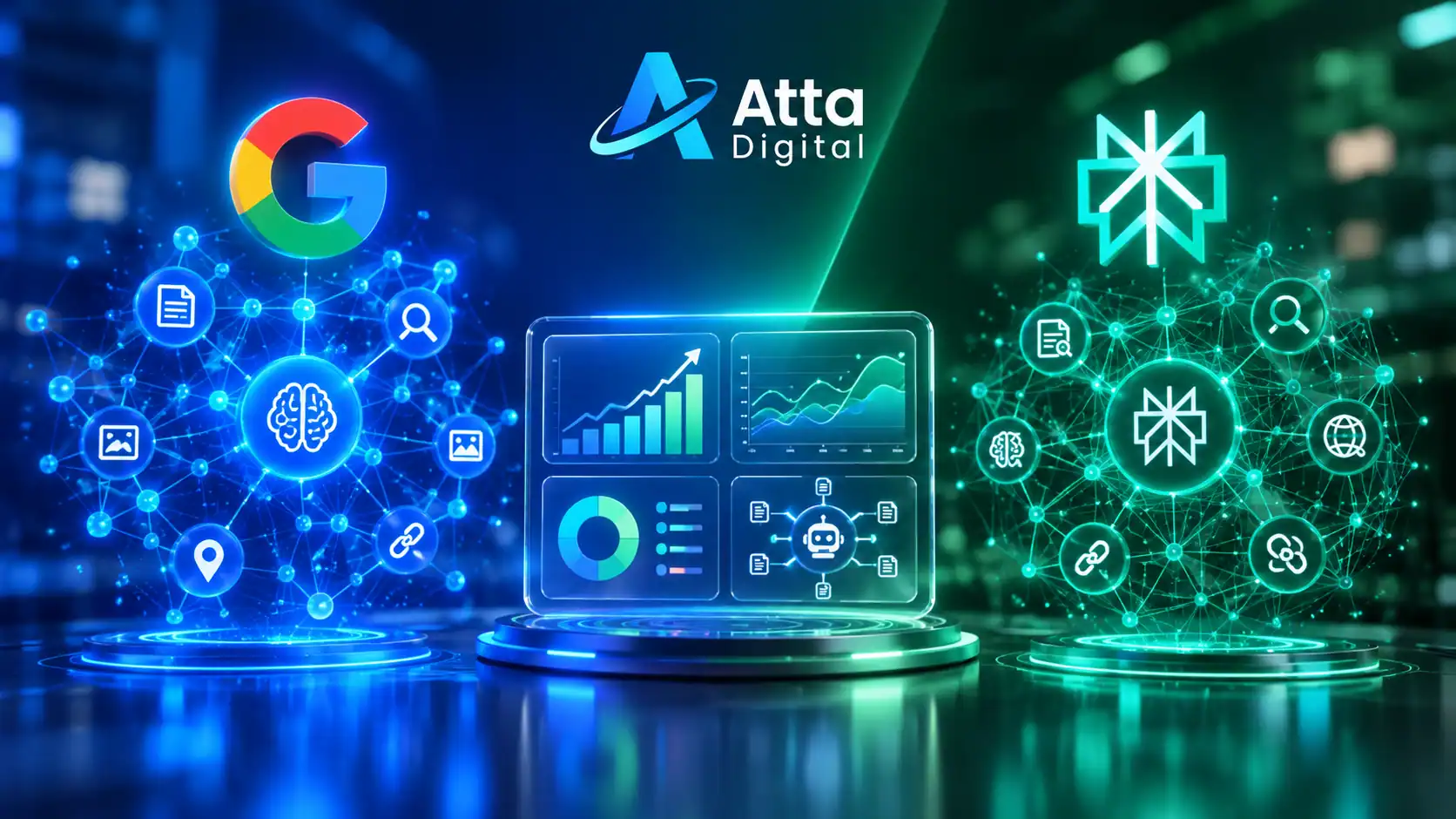
The Structural Shift in AI Overviews vs Perplexity Discovery
To optimize effectively, we first need to look past the surface interface. Google AI Overviews are integrated directly into standard search result pages, serving as a rapid summary block before organic search results appear. In contrast, evaluating AI Overviews vs Perplexity reveals that Perplexity functions as a standalone conversational engine built to deliver structured research reports complete with clear footnote citations.
When running tests at Atta Digital, we observed that Google AI Overviews prioritize high domain authority, established entity validation, and structured schema data. Meanwhile, analyzing AI Overviews vs Perplexity content preferences shows that Perplexity heavily favors fresh web documents, community discussions, and highly cited expert publications.
Decoding AI Overviews vs Perplexity Algorithmic Mechanics
The core algorithm powering Google AI Overviews relies on Gemini models integrated into Google’s vast Knowledge Graph. It draws heavily from pages that already rank within top organic positions. To verify official guidelines, review the authoritative Google Search Central Documentation for entity indexing rules.
Conversely, Perplexity operates with a hybrid retrieval system. It searches live index pools and attributes sources directly. Examining AI Overviews vs Perplexity technical workflows highlights these key differences:
- Google AI Overviews target: High authority entities, concise summary paragraphs, and structured table data.
- Perplexity Search target: Direct technical clarity, community discussions, and live index verified citations on Perplexity AI Engine.
Key Takeaway for B2B Publishers
Ranking in modern generative search is not about spamming keywords. Comparing AI Overviews vs Perplexity frameworks proves that high information density wins. Pages that offer genuine original research and clear answers get cited consistently.
AI Overviews vs Perplexity Feature Comparison
Here is a side-by-side technical summary comparing how both systems evaluate and surface web content:
| Optimization Vector | Google AI Overviews | Perplexity Search |
|---|---|---|
| Index Source | Google Core Search Index | Multi-Engine & Live Web Crawling |
| Primary Ranking Factor | Entity Trust & Top Organic Positions | Recency, Citation Quality & Direct Match |
| Content Preference | Structured Lists, Tables & Concise Text | Detailed Explanations & Community Consensus |
| Technical Endpoints | Schema.org & Standard Web Vitals | Machine-Readable Files & Fast Server API Responses |
Five Practical Steps for AI Overviews vs Perplexity Optimization
Building a future-proof web strategy requires balancing your approach between both platforms. Here is the operational playbook we implement at Atta Digital under the guidance of Atta Hussain Lakho.
1. Optimize for Direct Answer Extraction
Place a concise two-sentence answer immediately below every major H2 heading. This provides a clean chunk of text that generative models can extract without processing excess page noise.
2. Deploy Autonomous Agent Manifests
Make sure your root server hosts standardized index files. As outlined in our previous Agentic SEO Guide, hosting clean machine-readable documentation helps autonomous discovery crawlers index your brand catalog smoothly.
3. Incorporate Authoritative External References
Generative systems validate claims by cross-referencing sources. Combining dofollow authority links to documentation like Google Search Central alongside nofollow references creates a powerful backlink profile structure.
4. Structure Technical Data with Tables
Both platforms love structured tables. Information presented in clear rows and columns makes AI Overviews vs Perplexity comparison data significantly easier for language models to parse.
5. Align with GEO Strategies
Combine your technical setup with robust content formatting. For a deeper breakdown on optimizing specifically for Gemini-based answer blocks, explore our detailed playbook on GEO Strategy 2026.
Measuring Success in AI Overviews vs Perplexity Traffic
Traditional analytics tools often miss referral traffic coming from conversational answers because users frequently consume information without clicking through immediately. However, tracking brand citations and direct mentions provides a clear view of your performance across AI Overviews vs Perplexity search results.
Final Thoughts & Action Plan
The rise of generative engines is not the death of organic search; it is simply a refined evolutionary step. By aligning your website architecture with structured data standards, high information density, and clean server responses, you ensure your brand remains highly discoverable.
Ready to Scale Your Business in the AI Search Era?
Partner with Atta Digital and Atta Hussain Lakho to optimize your web assets for next-generation search engines, technical SEO, and AI discovery.
Get Your Free Strategy Call